· 6 min read
Embroidered vs Printed Hoodies: Care and Sizing Guide

You are looking at two black-or-grey hoodies. One has a small logo stitched on the chest, the other has a full graphic printed on the front. Same price range, very different garments. This guide explains how embroidery and printing differ, how each one behaves over time, how to wash them, and how to pick a size, using the two OKU hoodies as the worked example.
Embroidered vs printed: the short version
- Embroidered: a design made of thread, stitched into the fabric. It has texture you can feel and a slight relief. It suits small, simple designs: a logo, a short word, a single shape.
- Printed: ink applied to the surface of the fabric. It is flat, and it can carry detail, gradients and large images that thread cannot reproduce.
Neither is better. They are good at different things, so the right choice depends on the look you want.
How each one looks and feels
Embroidery
Thread catches the light, so an embroidered mark has a quiet, almost tailored look. Because it is built from stitches, fine detail is limited: that is why embroidered designs are usually compact. On the OKU Embroidered Hoodie (€85) it is a small Hanko seal with the OKU leaf on the chest of a black hoodie: stitched, not printed.
Printing
A print can fill the whole front with an illustration. On the OKU 奥 Hoodie (€79, heather grey), the character 奥 above the word OKU is printed on the front, a large graphic that suits printing better than stitching. If your design has several colours, shading or small details, printing is the natural method.
A note on the garment underneath
The method sits on top of the fabric, and the fabric matters as much. Both OKU hoodies are cut from the same family of blanks by Stanley/Stella: mid-weight, a blend of organic cotton and recycled polyester, with the same measurements. That means you can compare the two decoration methods fairly: the body of the hoodie is identical, and only the front changes.
Which lasts longer?
It depends on how you treat the garment more than on the method. As general guidance, not a promise about any specific piece: thread tends to stay intact if you avoid heat and rough handling, while a print can crack or fade if it is washed hot, tumble-dried or ironed directly. In both cases the care steps below do most of the work.
How to wash and care for both
These are general garment-care habits. Always follow the care label sewn into your own piece, which takes priority over anything written here.
- Turn it inside out. This protects a print from rubbing against the drum and keeps embroidery thread from snagging on other clothes.
- Wash cool. Lower temperatures are gentler on ink and on the fibres, and organic cotton blends keep their shape better.
- Use a gentle cycle and a mild detergent. Skip bleach and fabric softener on printed areas.
- Close zips and Velcro on other clothes in the same load so they do not catch the stitching.
- Air dry, or tumble on low. Heat is the main enemy of prints. Hanging a hoodie flat or over a rack is the safest option.
- Iron with care. If you must, turn it inside out and never press directly on a print or on stitches.
- Store folded, not on a thin hanger: a heavy hoodie stretches at the shoulders when hung.
Sizing: what the maker says about OKU hoodies
Both OKU hoodies are mid-weight, in organic cotton and recycled polyester, unisex fit, sizes S to 2XL. The maker's sheet (Stanley/Stella, via Printful) says this cut runs large in Europe: between two sizes, take the smaller one. Here are the measurements from the size guide, in cm, garment laid flat (width is measured from armpit to armpit, so double it for the full circumference):
| Size | Width | Length | Sleeve |
|---|---|---|---|
| S | 50 | 68 | 63.5 |
| M | 54 | 70 | 65.5 |
| L | 58 | 72 | 67.5 |
| XL | 63 | 75 | 68 |
| 2XL | 68 | 77.5 | 68.5 |
The maker notes that a piece may vary by up to 2 cm. The easiest method: lay your favourite hoodie flat, measure it from armpit to armpit, and pick the size whose width is closest. Want a layered, oversized shape? Stay with your usual size. Want it closer to the body? Go one size down.
So which should you choose?
- Pick embroidered if you like a discreet, textured logo that works with anything, and you want a hoodie that looks the same dressed up or down.
- Pick printed if you want the graphic to be the point of the outfit.
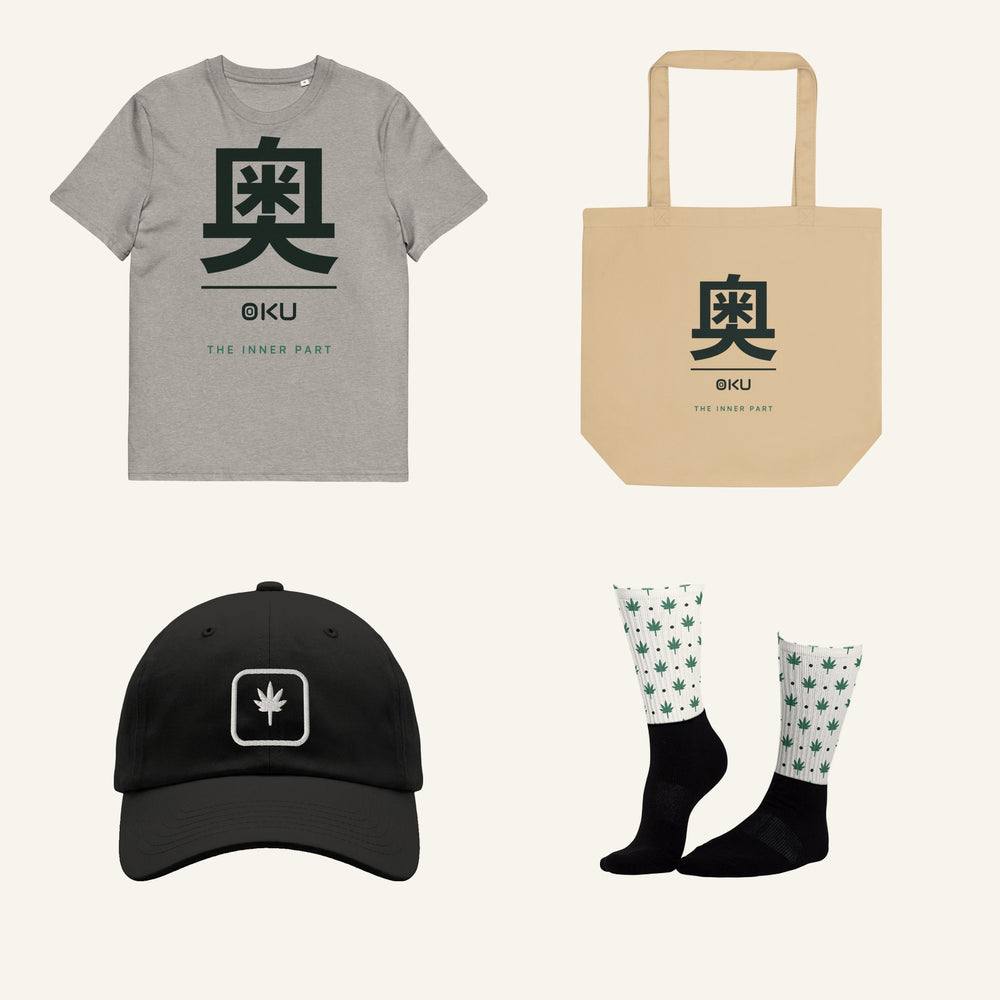
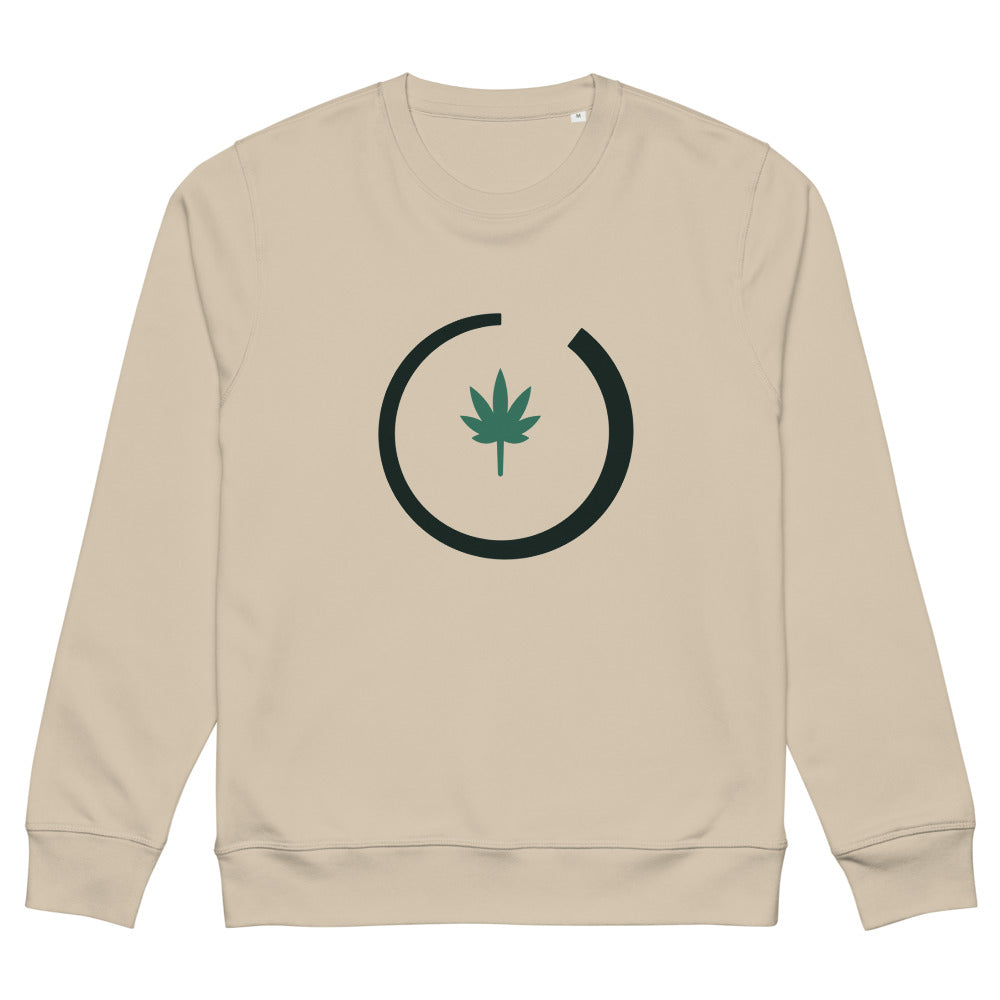
- Not sure? Start with the one you would wear most often, and see the rest of the OKU club collection, including the OKU Enso Sweatshirt (€69) if you prefer a crew neck.
Both hoodies are made to order in the EU, and delivery estimates for your country are on the shipping page: 7 to 11 days is typical for most EU countries, production included.
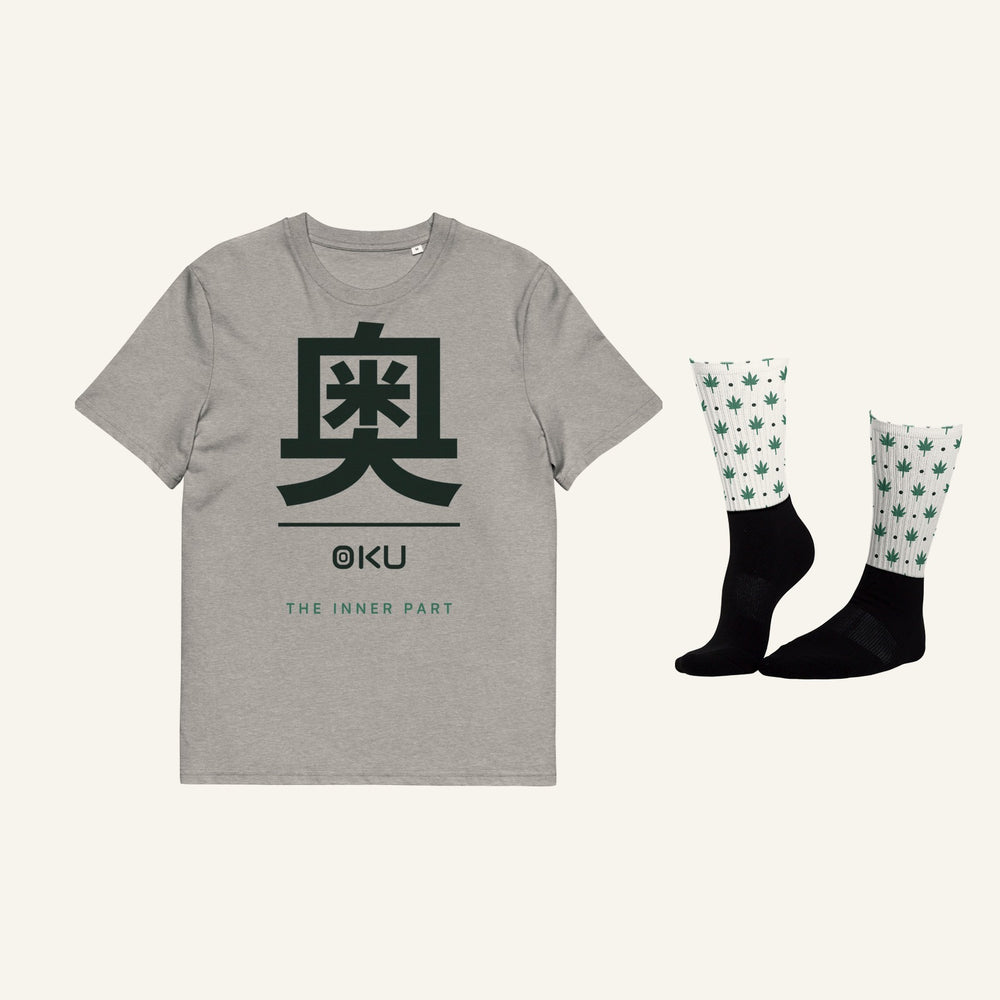
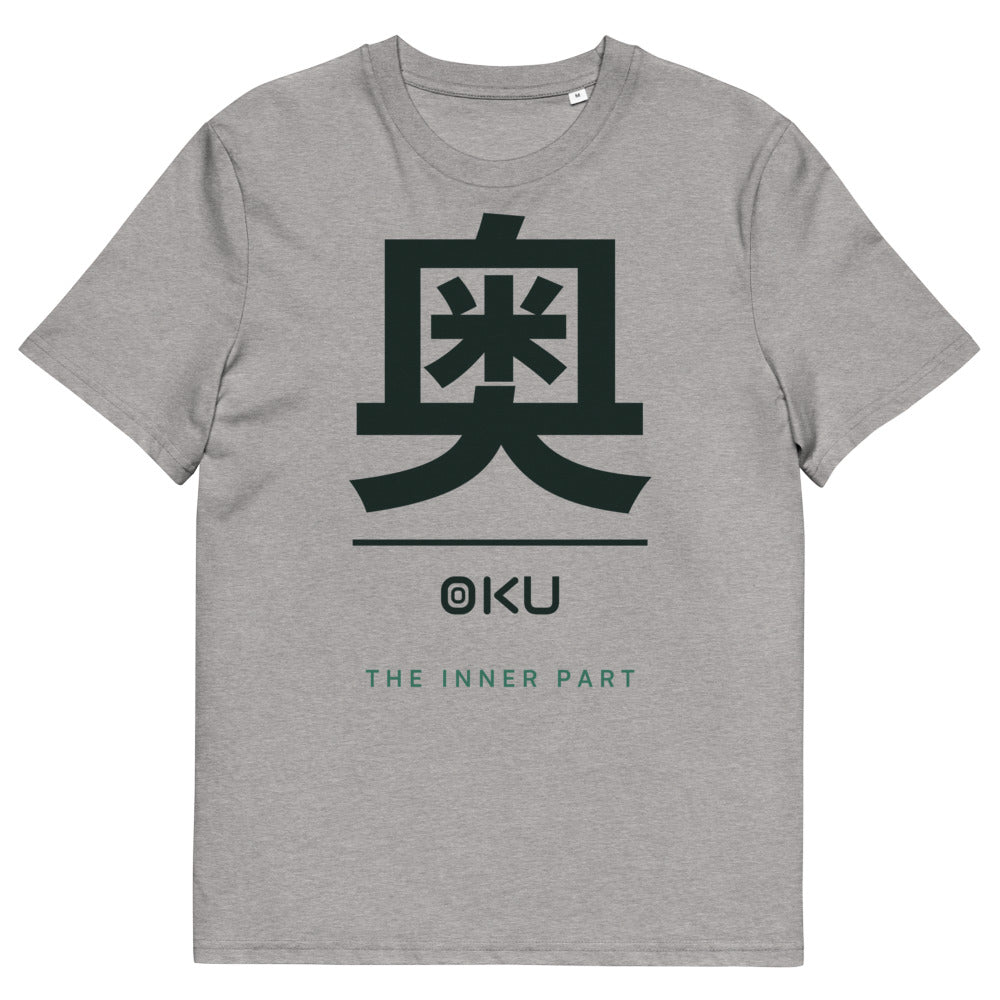
The same logic applies to tees: the embroidered t-shirt in organic cotton carries a small stitched Hanko seal, while the OKU 奥 T-Shirt is printed, so the care steps above work for both. Buying one as a present? See our Japanese streetwear gift ideas.
FAQ
Is embroidery better than printing?
Neither is better in general. Embroidery suits small, simple marks and has a textured look; printing suits large or detailed artwork.
Can I tumble dry a printed hoodie?
The safest habit is to air dry. If you use a dryer, choose a low setting, keep the hoodie inside out, and check your care label first.
Do OKU hoodies run big?
According to the maker's sheet, yes: between two sizes, take the smaller one. The full table is on the size guide page.
What are the OKU hoodies made of?
Organic cotton and recycled polyester, in a mid-weight cut. The organic cotton content is certified GOTS and OCS, and the recycled polyester GRS, as stated by the maker via Printful.
Can I return a hoodie if the size is wrong?
Yes. You have 14 days from delivery to return an item without giving a reason, and our standard designs are not personalised, so they can all be returned.